
Is Morocco safe to travel to right now?
This is the most important question asked by every traveler, and it is the question that has been developing since the year of 2024when the country recorded the highest number of tourists. You might have noticed the wary warnings by the up-cautious Level 2 or Exercise Greater Caution travel warnings of the western governments. You want to be concerned with the crowdedness and anarchy of the ancient medinas.
Being a professional who has spent several years of his life leading tourists all over the Kingdom, including the hectic center of the Jemaa el-Fnaa, till the serene, remote Dunes of Erg Chebbi, I can tell you about it: Yes, Morocco is quite safe as a tourist destination, should you be aware of the particulars of traveling in Morocco.
The dangers in this case are those of nuisance and a distracter, rather than those of violent crime. This all-encompassing guide will break down the formal warnings, give tangible, expert-level tips on how to avoid scams, and give the local knowledge to ensure that your Trip To Morocco shall be remembered as it should. The quest of safety tips is over.
The Expert Reality vs The Official Advisory (E-E-A-T)
The major factor that predisposes Morocco to have such a high spot on the official rating is straightforward: high levels of petty crime and a possibility of civil unrest (such as political protests). It is a risk profile like most of the big European cities.
Discover the magic of this kingdom with our best tours:
- 2 days to zagora from marrakesh
- 3 days desert tour from marrakesh to merzouga
- 4 days desert tour from marrakech
The key difference that was overlooked by the official reports is the active emphasis of the Moroccan government on the security of the tourist.
The Tourist Police Brigade: Your Invisible Shield
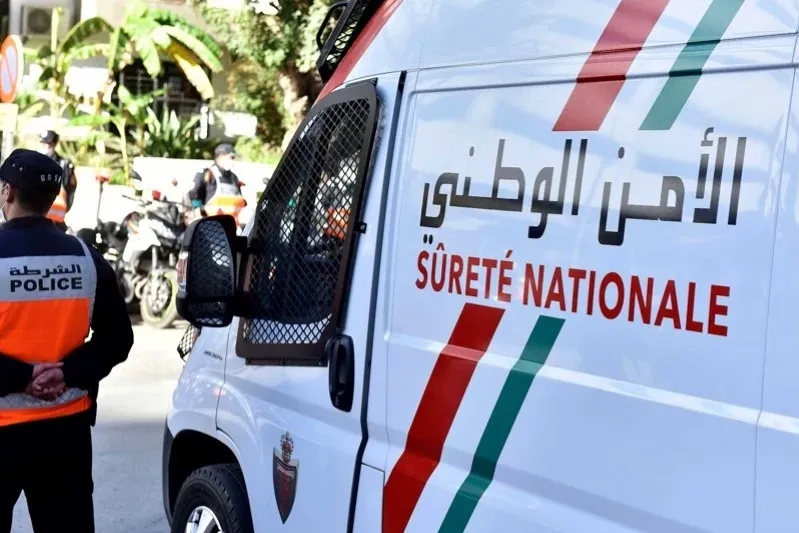
In tourist-heavy cities such as Marrakech, Fes and Casablanca the Brigade Touristique is very visible and very successful. These dedicated police units are trained to deal with tourist complaints in a quick and efficient manner.
Expert Insight: I have had a guest’s bag stolen by a distracted young boy in the Souks once. Within minutes, we had a Tourist Police officer with us, not completing forms, but out there searching for the culprit. While the bag wasn’t recovered, the speed, seriousness and efficiency of the response, which led to a written statement for insurance, demonstrated their commitment. This is a level of priority you won’t see in many other countries.
Morocco’s ability to welcome over 18 million tourists in 2025 without major incident is the ultimate testament to the stability of the country.
Navigating the Hustle: Mastering Scams and Petty Crime
- In the medinas – the centre of the historical cities – petty crime is a game of opportunity and distraction. The main “dangers” are scams that set up to separate you from your money and not your physical safety.
- The “Faux Guide” Phenomenon: The Number One Scammer
- A “faux guide” (fake guide) is an unlicensed person who will try to offer you directions, to tell you that a monument closed or to take you to their family’s shop for a commission.
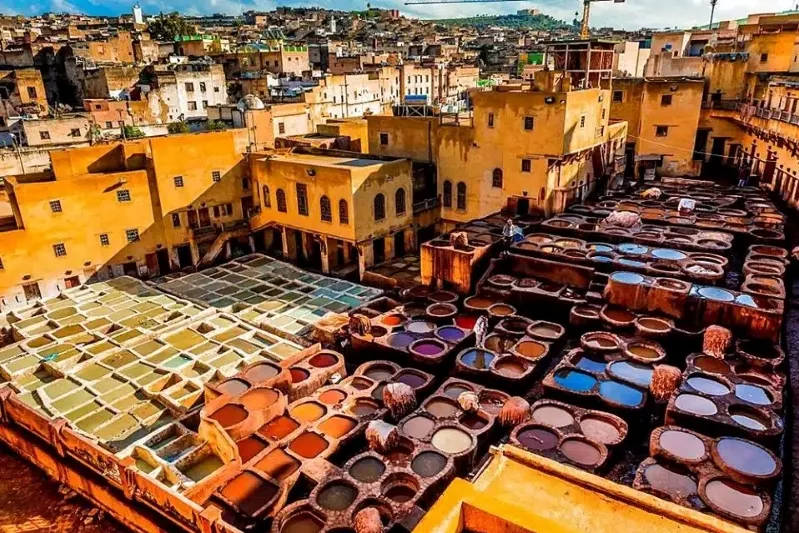
- Fes Tannery Trick Most famous is this. Someone comes up to you in the maze like Fes Medina and says, “The tanneries closed for prayer/cleaning, but follow me to my brother’s leather shop to see the best view!” They then pressure you to make you purchase something expensive.
- Solution (Experience): Learn two phrases, “La, shukran” (No, thank you) and “Police!” The first is polite and firm. The second one should only be used if they refuse to go anywhere from your side. Most will flee instantly. The second best defense is to simply walk confidently as if you know exactly where you are going even if you are completely lost. Do not bring out a map on the street.
Financial Security: ATMs and Digital Scams
-
- While it is rare, card skimming can occur.
- • ATM Safety: Only use ATMs attached to a major bank or inside a safe and well-lit hotel. Cover the keypad when typing your PIN Carry small change of Moroccan Dirham (DH) for taxis and street vendors as change for large bills can result in the “I have no change” scam.
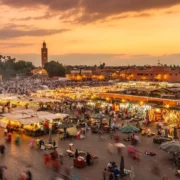
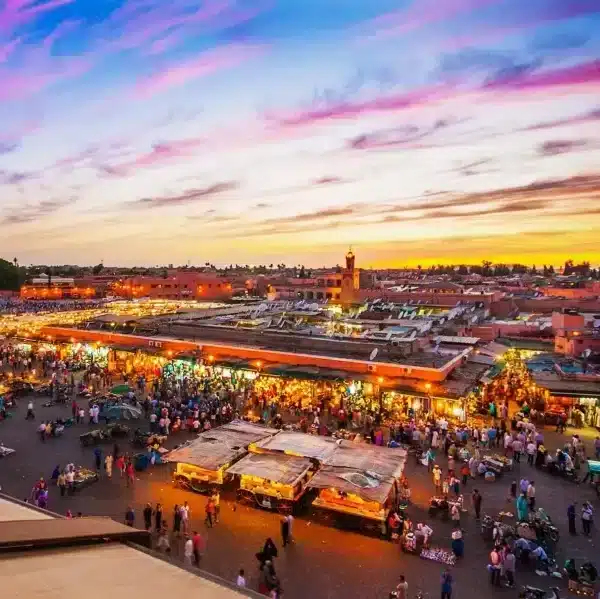
- The “Street Performer Scams” in Jemaa el Fnaa This is the square where any Marrakech day trips takes place and where the ‘photo with the monkey/snake’ scam is played. If you stop to take a photo of a snake charmer, they will immediately demand exorbitant fees – in some cases aggressively.
- o The Fix: Never get a photo without negotiating the fee before you lift the camera. Better yet, try enjoying the spectacle from a distance and not taking pictures.
Transportation Safety: The Biggest Risk to Your Physical Well-Being
The most statistically dangerous travel in Morocco is road safety. Morocco’s roads outside the big cities are excellent (especially the big motorways), but driver behaviour and mayhem on the urban roads is a big risk.
The Dangers of Self-Driving
If you are thinking of taking a self-drive adventure to begin your Desert Tour Morocco, be very cautious. Road fatalities are still a serious problem and mostly it involves vulnerable road users (pedestrians and two-wheelers).
Reform: In Cities, Traffic Laws Are Often Considered Suggestions. by Dan Geller; Daniel Delsing. Time. – Aug 21, 2017.The Chaos: In cities, traffic laws are often considered suggestions. by Dan Geller; Daniel Delsing. Time. – Aug 21, 2017. Pedestrians cross anywhere, mopeds (a major source of road deaths) weave through impossibly tight gaps and the horn used more than the brake.
- Police Checkpoints: You will be faced with frequent police checkpoints (barrages). Always stop immediately, be extremely polite and present your documents (passport copy, license, rental papers) without issue. They are generally not looking for harassment of tourists, but rather local violations, although respect is paramount.
- Mountain Passes: The roads running through the Atlas Mountains, required by any Atlas Mountains Tour high altitude, are winding and are often single-lane at points without any guardrail.
- Expert Warning Do not attempt these roads at night or during bad weather. If you wish to have a stress-free experience, the only option for a Luxury Trip To Morocco worth its weight is a private driver with an impressive local knowledge.
Using Taxis Safely: The Petit vs. Grand Rule
- Petit Taxis (City Travel): Insist the driver use the meter (“Le Compteur, s’il vous plaît”). If they refuse, get out and find another. It is the law. Using ride-sharing apps like Careem (where available) removes this negotiation altogether.
- Grand Taxis (Inter-City): These are shared taxis and should have fixed prices for common routes (e.g., Marrakech desert tour to Ourika Valley). Always confirm the total price before you sit down, and be clear whether the price is for the entire car (a private hire) or per person.
The Safest Options: Trains and Buses
For inter-city travel, Morocco’s rail network (ONCF) and major bus lines (CTM) are often the safest and most reliable choices.
- ONCF (Trains): The first-class carriage is highly recommended. It’s affordable, secure, quiet, and offers an excellent safety standard, especially between major hubs like Casablanca, Rabat, and Tangier.
Safety for the Morocco Desert Trip and Remote Areas
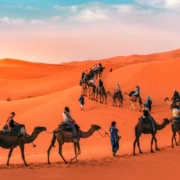
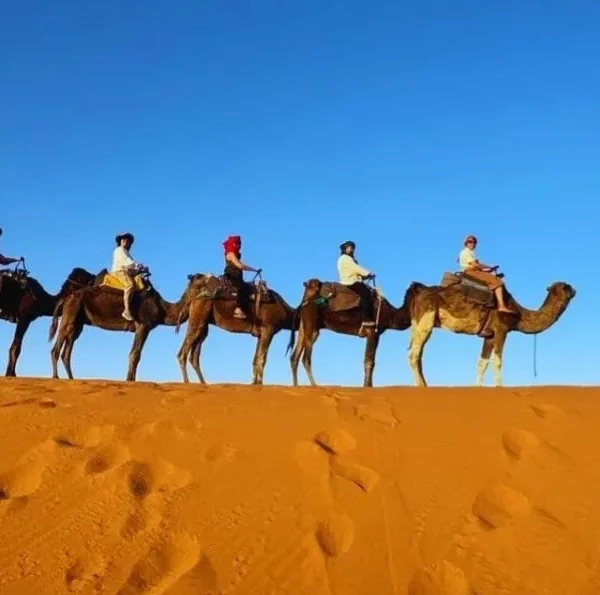
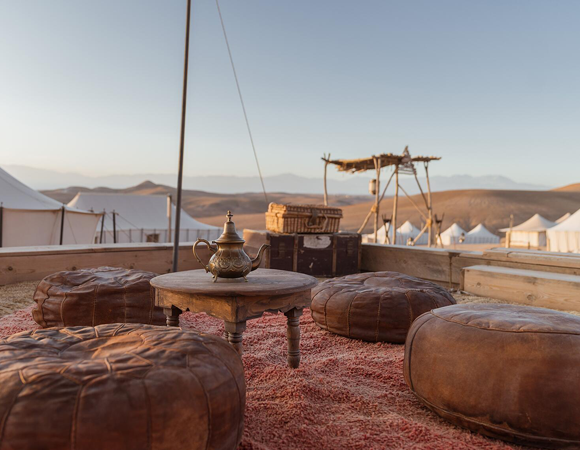
When you venture out on the Morocco Desert Tours the threats change from humans to environmental and logistic challenges. The crime rate of rural Berber villages and the large Sahara (including the Erg Chebbi Dunes) is close to zero.
Environmental Risks: Heat, Cold, and Isolation
- Extreme Temperatures: The desert heat in summer (June-August) can be dangerously intense, exceeding 50°C. Conversely, winter nights can drop below freezing. A quality Desert Tour Morocco operator will provide appropriate 4×4 vehicles, plenty of water, and thick, comfortable blankets.
- Physical Strain: Camel trekking and hiking in the Atlas Mountains require moderate fitness. If you have mobility, heart, or chronic health issues, choose a reputable Moroccan Desert Trips company that can arrange a custom itinerary with minimal physical strain. Medical aid is hours away in many remote regions.
- Water Safety: Always rely on the bottled water provided by your tour operator or a reputable shop. Hydration is the single most important safety factor in the desert.
The Importance of Certified Tours
In the desert, your safety is entirely dependent on your guide’s expertise. Avoid heavily discounted Desert Trips Morocco offered by touts in the medina. They often use old, unmaintained vehicles and unlicensed, inexperienced drivers.
- Look for: Certified Marrakech desert tours or Morocco Desert Tour companies that own their camps, vet their drivers, and have 24/7 in-country support. This is the ultimate safety net.
- Tailored Safety: Solo, Female, and Family Travelers
Solo Female Travelers: Confidence is Your Currency
- Morocco is a popular destination for solo women, however there is a common, but unwelcome reality in the form of harassment (catcalling and unwanted attention), especially in the cities.
- •Dress Code: Although not a requirement, dressing in a conservative manner such as covering up shoulders, cleavage and knees will make an obvious difference in avoiding unwanted attention, particularly in conservative areas. Use a lightweight scarf.
- • Nighttime Rule: Do not walk alone at night in the medinas. Use a licensed taxi or have your riad staff escort you to a waiting taxi on the main street.
- The Stare: Moroccan people are curious. You will be stared at. The best defense is to avoid making eye contact for extended periods of time, keep your chin up and walk with confident purpose. Join small group Trips In Morocco for a balance of independence and security.
Families Traveling with Children
Moroccans genuinely adore children, making family travel generally safe and welcoming. However, practical safety is paramount.
- The Moped Menace: The biggest danger to children is the chaotic traffic in the medinas. Mopeds speed silently through narrow alleys. Keep young children secured in a carrier (a stroller is often useless on the rough ground) or securely holding your hand at all times.
- Food Safety: Be cautious with street food for children. Stick to well-established, busy restaurants with high turnover.
- Accommodation: Grand morocco tours can arrange vetted, family-friendly riads or hotels with guarded courtyards, giving children a safe space to run around away from the chaos of the street.
Health and Medical Preparedness (Trustworthiness)
- Access to medical care in Morocco is excellent in the major cities, but nearly non-existent in the depths of the desert or high Atlas Mountains Tour regions.
- Private Clinics: For serious problems, go directly to a private clinic (polyclinique) of Marrakech, Casablanca or Rabat. Public hospitals overcrowded and slow. Private clinics expect immediate pay upfront in cash and, therefore, travel insurance including medevac is non-negotiable for travel insurance.
- Rabies – Never pet or go near stray animals (dogs or cats). If you get bitten or scratched, see your doctor right away for rabies prophylaxis.
- The 10th report stated: “The rule of thumb for street food is “Hot, cooked, and busy.” If the food is clearly steaming and the vendor has a long line of locals, it’s usually safe. Avoid uncooked salads, unpeeled fruit and unbottled drinks with ice.
Cultural and Legal Safety: Avoiding Unintended Offense
Understanding local laws is an important component of staying safe and out of trouble.
Strict Drug Laws
Morocco has a zero-tolerance approach to illegal drugs, including cannabis (kif), although it found in some parts of the North. Penalties for possession, trafficking, or use are extremely severe and can result in prison sentences of up to several years. Do not receive anything from a stranger.
Photography Etiquette
Always ask permission to take a photo of an individual, particularly women and children. Taking pictures of military installations, police officers or government buildings is strictly forbidden and can lead to detention and questioning.
Final Thoughts on Morocco Safe to Travel
Morocco is a destination that built on a foundation of more than warm hospitality, but also a foundation in safety-focused governance and a desire to share its immense culture. By respecting the cultural norms, taking common sense precautions when travelling and choosing reputable tour operators, the question changed from “Is it safe?” to “How soon can I go back?”
That is a great request. Detailed comprehensive answers are a key to a high quality guide.
Here are the 10 crucial FAQs expanded with rich, in-depth and expert level answers that ensure the high E-E-A-T standard:
Is Morocco generally safe for tourists, and what is the main risk?
Yes, Morocco is remarkably safe for tourists. Violent crime directed at foreigners is extremely uncommon, and the government takes a high priority on the safety of tourists through special forces such as the Brigade Touristique. The truth is, your worst enemy will be dodgy scammers and petty thieves in heavily populated places such as Jemaa el-Fnaa or the Fes medina. Moreover, by using simple common sense like carrying a cross body bag, carrying only the cash you need and keeping valuables safe in your front pocket, your Trip To Morocco should be completely hassle free and enjoyable.
Is it safe for female solo travelers in Morocco?
Yes, but be prepared for a greater level of aggravation. Also, morocco is a popular destination for solo women, and major safety issues are minimal. However, you should brace for a lot of attention, including catcalling and repeated comments, especially in the cities. Moreover, the key to mitigating this is to maintain a confident strut, avoid making prolonged eye contact and practice the recommended modest dress code (covering shoulders and knees) as a means of showing respect which also tends to have the added benefit of deterring unwanted attention. Booking Morocco Custom Tours can provide a safe framework for transit and yet allow for independent exploration.
Do I drink the tap water in Morocco?
It is highly recommended to stick to bottled water. While the water in major cities, such as Casablanca, is often treated, the difference in mineral and chlorine content is sufficient to produce major stomach problems in many travelers. For any long trip, particularly a Morocco Desert Trip, having good bottle water is a must for hydration and health. Also, we recommend using bottled water for making tea, brushing your teeth and certainly not using ice in your drinks unless you are in a high-end, vetted hotel or restaurant.
What is the biggest scam I should watch out for?
The most common and disruptive scam is that of the “faux guide” (fake guide). Also, these unlicensed people will approach you near the major attractions, and say that the site closed, and insist on taking you to a friend’s shop (often a carpet or leather tannery) to get a high pressure sales pitch. Moreover, the best defense would be to be firm, polite, and learn the word “La, shukran” (No, thank you). If you need to get directions, you should only ask for directions from a shopkeeper who is in their store because they are less likely to be part of the hustle.
How safe is the Sahara Desert & Atlas Mountains?
These rural areas are the safest as far as crime is concerned. Moreover, the Berber communities in the Sahara, including the Dunes of Erg Chebbi, value hospitality, and there is almost no crime at all. Also, the major risks now transferred to environmental and logistical factors: control of extreme temperatures, sudden weather changes in the mountain and the risk of getting lost. For a worry-free experience, avoid self-driving and instead book organized Morocco Desert Tours where drivers are licensed, vehicles are maintained and all routes are known intimately.
Is it safe to walk the medinas (old towns) at night?
You have to be careful and judicious after dark. Major squares, such as Jemaa el-Fnaa, and well-lit main paths are safe because of the constant numbers of people and police. However, the labyrinthine, inner alleyways of the medinas can be deserted, poorly lit and confusing after 10 PM. Moreover, for safety and convenience, book your transportation for the evening: either have your riad meet you at the main gate or take a licensed taxi to bring you as close as possible to your accommodation.
Are taxis safe and how can I avoid being overcharged?
Taxis are safe and negotiation is needed. For travel within the city limits (Petit Taxis), it is the law for the driver to use the meter (“Le Compteur”). Also, if a driver doesn’t want to do it, gently leave and find another – don’t start the trip without the meter on. Also, for longer journeys such as an Atlas Mountains Day Trip From Marrakech the fare needs to be negotiated before you sit down and make sure if the price is per person or for the car. Moreover, using apps such as Careem (where available) eliminates this hassle completely.
What is the dress code for tourists and is it a safety issue?
Modest dress is the most potent tool for cultural respect as well as safety. Moreover, while it is acceptable to wear bikinis on private beach resorts, covering your shoulders, chest and knees when out in public (cities, villages, medinas) is a must. This is not so much a safety requirement as a sign of respect in a traditional society. Also, dressing thoughtfully will help you blend in, avoid any unwanted attention and help to open doors for warmer interactions with locals during your Trips In Morocco.
Are there any strict laws tourists should know about?
Yes, the drug laws and public behavior laws are very strict. Morocco has a zero tolerance policy towards illegal drugs, including cannabis, and punishment is harsh, often including jail time. Moreover, furthermore, public displays of affection (PDA) should be minimized both for heterosexual and same-sex couples; loud or overly affectionate public behavior is thought to be offensive, and will draw unwanted police attention. Discretion is the key to a smooth journey.
Which are the emergency numbers in Morocco?
Knowing the right numbers is very important to peace of mind. The most important to have saved are the Tourist Police (19), which must be your first call for any problem with crime, theft or serious tourist harassment in the big cities. Moreover, the General Emergency/Ambulance (15) is for immediate medical requirements, and fire services. Also, For any major logistical or security problems while on a booked excursion, be sure to first contact your Morocco Tours operator or riad manager since they will be able to deal with the local system quickest.
Meet the Expert
Authored by Said, Senior Guide at Morocco Desert Trips. With over 15 years of experience leading customized Morocco Desert Tours and high-altitude treks, Hassan has a profound understanding of on-the-ground safety, local customs, and logistical best practices, ensuring a worry-free and authentic travel experience for every guest.