

This guide explores the must-visit regions in Morocco, taking you through the biodiversity of Ifrane, the fossil-rich desert town of Erfoud, and the towering dunes of Erg Chebbi in Merzouga. Beyond the sand, you will discover the dramatic depths of the Todra Gorge and the cinematic history of Ouarzazate, eventually crossing the High Atlas to reach the ancient, red-earthed Kasbahs of the Ounila Valley. Whether you are wandering through the UNESCO-listed Ait Benhaddou or trekking to remote Berber villages, these diverse landscapes offer an unparalleled glimpse into the heart of Moroccan heritage.
Middle Atlas to the Desert: Erfoud, Merzouga & the Sahara
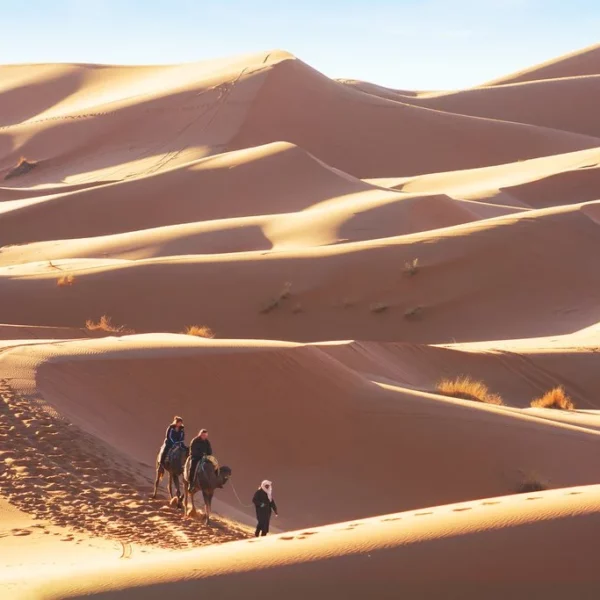
Erg Chebbi sand dunes in the Sahara Desert near Merzouga
The Middle Atlas is incredibly biodiverse (case in point: Ifrane National Park), and huge swaths of cedar forest make up the mountainsides, the trees hiding families of Barbary macaque monkeys. Though they don’t hide too well—you may also see them on the side of the road.
As you make your way south, you’ll continue over the Tizi-n-Talremt pass and into the Ziz Valley. Yep, those are palm trees you’re seeing. The fortified houses along the road are known as “ksars,” and they were built to protect gold, salt, and spices, back when these precious commodities were essentially currencies. You may also notice the beginnings of sand dunes, though don’t stop yet—they’ll get much grander soon.
Soon you’ll hit Erfoud, a lively market town. It’s known for fossils of all things, and the obvious souvenir from here is anything artisan-crafted from one of the local collectives, be it a small fossil pendant, a “fossilized” bowl, or an 800-lb slab of sandstone. Trilobites the size of your head require quite the shipping!
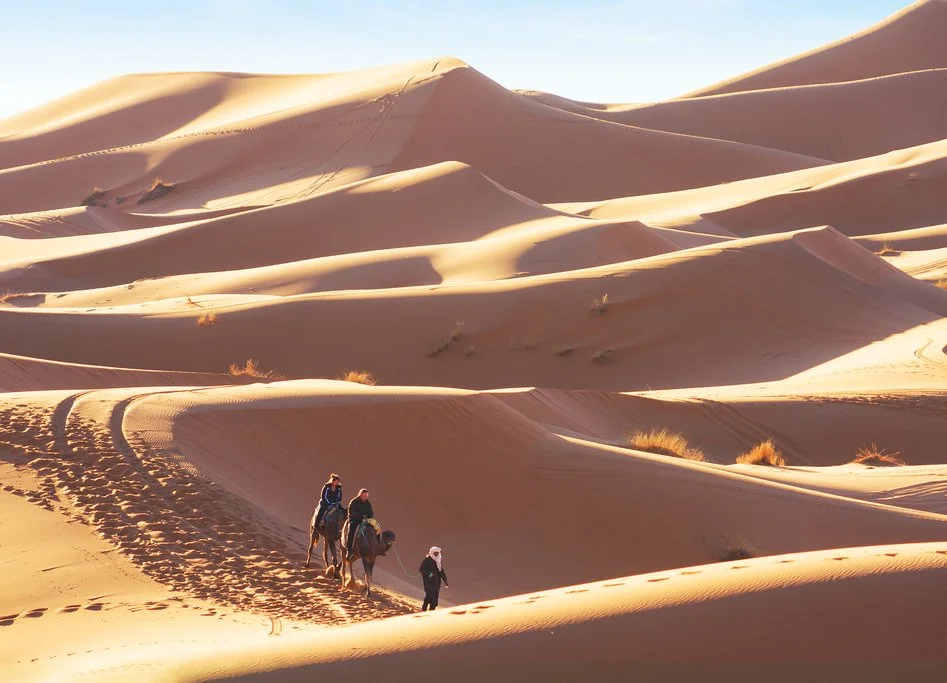
Upon leaving town, head toward the small village of Merzouga. Get the camera ready: You’ll soon spot the most popular dunes of the Sahara, and Morocco’s tallest (though not as wide as others). They’re known as the Erg Chebbi, and this sea of sand covers 13 square miles. Their formation is constantly changing—as sand dunes do—as is their color; to get the best photographs, go at sunrise or sunset. Take the Erg Shibi tour, and rent a sandboard to see them at downhill speeds up to 40mph. For a specific itinerary.
Planning an Unforgettable Morocco Adventure?
Experience our award-winning private Sahara desert tours, licensed local Berber guides & customized itineraries from Marrakech, Fes & Casablanca.
Todra Gorge, Dades Valley, and Ouarzazate
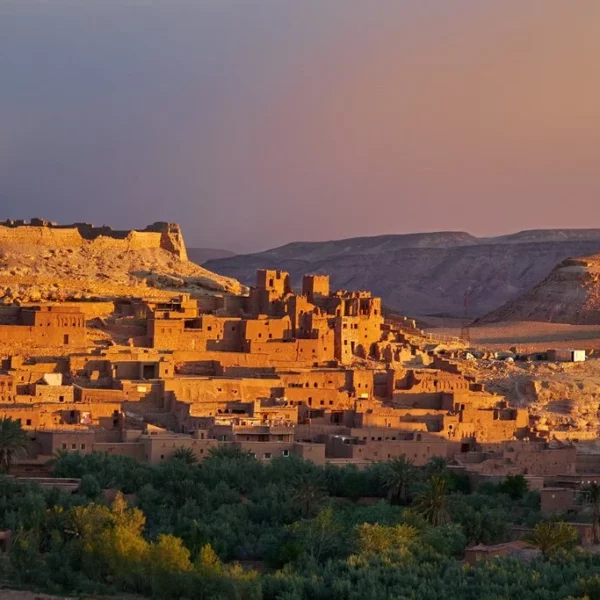
Ouarzazate and Khamleya
Khamleya (alternatively spelled Khamlia) is a very-nearby traditional Saharan village. Walk around, enjoy the traditional music, or consider the larger market town of Rissani. Try to plan your itinerary to see the area on a “market day,” and definitely scope out the donkey parking lot.
Alternatively, get straight back into nature. Though you’re in the desert, you’ll see buttes, mesas, and plateaus that seem very “Arizonian,” and certain areas will seem more riparian—that is, riverbeds have turned what would be sandy, dry areas to green river oases. That’s all thanks to the Todra river, which has cut its way through the red limestone. It’s formed the Todra Gorge, a whopping 984 feet deep. The shallow river, while nice to look at, is even better when you’re in it.
Back in civilization, the next common stop is Ouarzazate. It’s a Hollywood hotspot, the set of a handful of major blockbusters like Gladiator, Black Hawk Down, American Sniper, and Game of Thrones. The backdrop is Mount Toubkal, coming in at 13,671 feet, the highest peak in Morocco’s highest range.
The High Atlas: Zagora, Kasbah Telouet, and the Ounila Valley
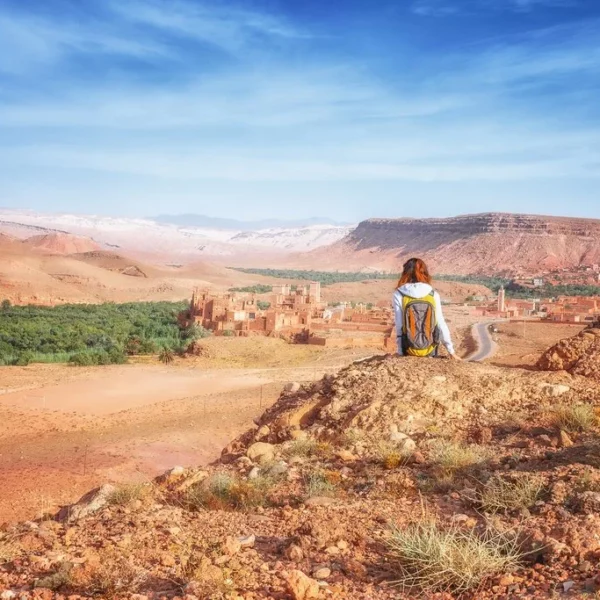
You’re now somewhere near the tip-top of the Tizi-n-Talremt pass in the High Atlas. The Draa River makes this area surprisingly lush, and date palmeries abound here. If you see a date stall, definitely stop—there will be loads of other fruits and veggies, too. Soon you’ll be in Zagora, a small-yet-grand city. The wide, vast Tinfou sand dunes can be found near the edge of town; though they’re not nearly as tall as the dunes around Merzouga, they absolutely cover the landscape, and they’re much easier to climb.
Not far away is the bizarre Kasbah Telouet, widely considered one of the most extraordinary sights of the Atlas. Though it was only built in the 1860s—which is nothing compared to the kasbahs built 800 years ago—it’s crumbling into the dark red earth, a fascinating remnant of the style and melodrama of Moroccan political government and power still within living memory. It’s incredibly remote, hugging the line between absolute grandeur and complete ruin: The decorated salon walls are often roofless and open to the elements.
Ounila Valley and Anemiter
Back on the road, get on P1506. You’re now in the Ounila Valley, which once served as the main route over the Atlas before the French constructed the Tizi-n-Talremt pass. It’s hard to believe, considering the scree slopes, parched hillsides, and lack of traffic. But now that it’s no longer the main route, it makes for a wonderful two-day walk.
You can meander between crumbling burgundy kasbahs and agadirs, cliff dwellings, terraced orchards, and olive trees, stopping at villages like Anemiter, a 2.5-hour walk from Telouet. It’s one of the best-fortified villages in the country, and from here, there are villages about every three hours. Assako, Tourhat, and Tamdaght are names you should look out for. If you’d prefer not to go on foot, private transport is an option as well—and don’t forget, you can always hire a mule at either end!
Ait Benhaddou and the Surrounding Region
Tamdaght
Tamdaght is worthy of its own point—it has, perhaps, the most authentic Berber feel of all the villages in the area. The uncrowded Kasbah Tamdaght may have a few crumbling towers (and a handful of storks’ nests), but that only adds to its old-world mystique, juxtaposing it from its larger neighbor down the road.
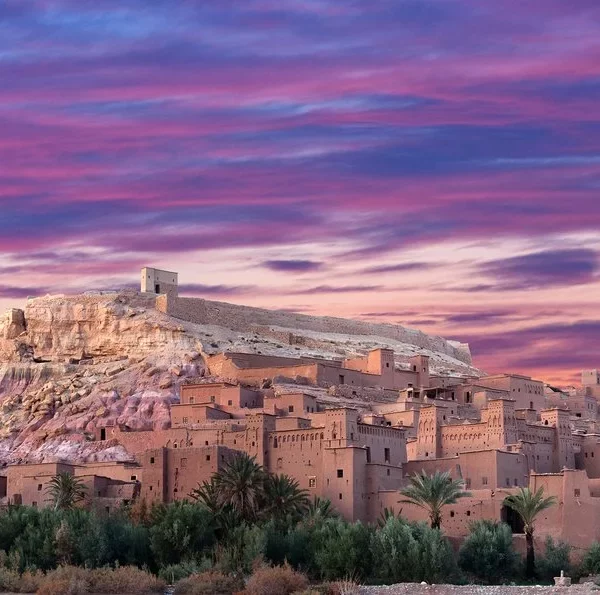
After Tamdaght, you’re now only a few miles away from Ait Benhaddou. This is the most famous Kasbah in Morocco, an ancient maze-like fortification unquestionably worthy of its UNESCO World Heritage Site status. This 11th-century ksar held an important position along the trans-Saharan trade route, and its history is still tangible today.
Spend a night in the old town, wander the empty alleys before the crowds come in, climb to the old granary at the top of the hill, and walk the old camel routes that once determined entire economies. Ascend the watchtower to view it all from above, or stay in the thick of it, watching local artists use saffron tea and the sun to create their works.
From here, your Moroccan adventure lands you back in the big city, ready to depart from Marrakech. Or do it all again, south to north—who knows what you’ll find on your way back to Fes?